


Tổng số bài đăng 486.
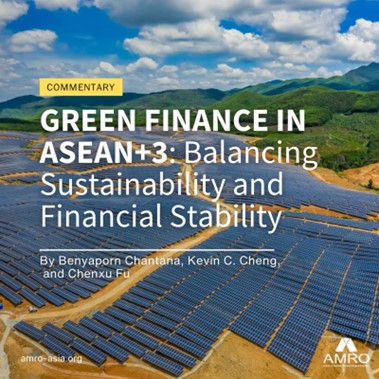
Experts from the ASEAN+3 Macroeconomic Research Office (AMRO) have recently highlighted the challenges of balancing sustainability and financial stability within green finance in the ASEAN+3 region.
Amid growing pressure from climate change, ASEAN+3 has been expanding its green finance efforts. By early 2024, green bonds from the region accounted for 20% of the total global issuance, reflecting a strong commitment to sustainable development. Green bonds benefit from a “greenium” (a yield differential compared to conventional bonds), which lowers borrowing costs and facilitates long-term green projects.
According to AMRO, the average greenium in ASEAN+3 is 15 basis points in the primary market, with higher greenium observed in bonds certified by trusted entities or denominated in local currencies. This reduces financial burdens, mitigates default risks, and contributes to overall financial stability.
Despite these benefits, the risk of greenwashing persists. Misleading information about sustainability could erode investor confidence, trigger capital withdrawals, and destabilize markets. Evidence from green construction projects indicates that some companies issuing green bonds still increase carbon emissions, raising concerns over transparency and regulatory oversight.
Furthermore, the transition to a green economy poses risks of stranded assets—assets that lose economic value due to climate-related changes. AMRO estimates that stranded assets could reduce banks' capital adequacy ratios (CAR) by 1.18% in ASEAN+3 economies and 1.53% in ASEAN economies, particularly for banks heavily exposed to carbon-intensive sectors.
To address the risks of greenwashing and stranded assets, AMRO recommends: Integrating climate risks into banking risk management frameworks and stress tests, in line with Basel Core Principles; Developing and enforcing robust green taxonomies to reduce information asymmetry and enhance transparency; Monitoring and verifying the use of funds to ensure green projects deliver genuine sustainable benefits.
Green finance plays a vital role in transitioning toward a sustainable economy. However, strong oversight and transparency are essential to mitigate risks, maintain investor confidence, and safeguard financial stability. Policymakers must enhance regulatory frameworks and supervisory practices to unlock the full potential of green finance while promoting sustainable economic growth across the region.