

Tổng số bài đăng 486.
Trade relations between Vietnam and South Korea, as well as Vietnam and Japan, initially stemmed from ASEAN+1 multilateral Free Trade Agreements (FTAs) and later expanded into bilateral FTAs. The ASEAN-Japan Comprehensive Economic Partnership Agreement (AJCEP) and the ASEAN-Korea Free Trade Agreement (AKFTA) were among the first FTAs Vietnam participated in as an ASEAN member signing agreements with non-ASEAN partners. These ASEAN+1 multilateral FTAs served as the foundation for Vietnam to develop bilateral FTAs with partners that offer deeper trade benefits, specifically South Korea and Japan, through the Vietnam-Korea Free Trade Agreement (VKFTA) and the Vietnam-Japan Economic Partnership Agreement (VJEPA). This combination of bilateral and multilateral FTAs has driven robust trade relations between the parties.
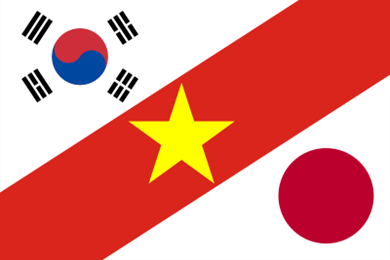
AKFTA and VKFTA
Vietnam has effectively leveraged the synergy between bilateral and ASEAN+1 multilateral FTAs. The AKFTA, effective since 2007, was a multilateral FTA between ASEAN and South Korea. In its early years, AKFTA yielded positive yet modest trade signals. For instance, Vietnam's exports to South Korea increased from $1.2 billion in 2007 to $1.7 billion in 2008 and $2 billion in 2009.
This phase provided Vietnamese enterprises with practical experience in exporting to FTA markets. Businesses not only benefited from preferential tariffs but also adapted to technical barriers, international standards, and conformity assessment procedures.
Building on this experience, Vietnam proactively negotiated the VKFTA, which took effect on December 20, 2015. In its first year of implementation (2016), exports to South Korea reached $11.42 billion, surging to $14.82 billion in 2017 (a 29.7% increase). By 2020, export turnover exceeded $19 billion, 1.8 times higher than in 2016. In 2022, bilateral trade between Vietnam and South Korea reached nearly $87 billion, with Vietnam’s exports hitting $24.2 billion, a 10.2% increase compared to 2021. In 2023, bilateral trade remained strong at $79.43 billion.
Notably, South Korea consistently ranks among the markets with the highest utilization rates of preferential Certificates of Origin (C/O). In 2021, the utilization rate reached 51%, with export turnover granted C/O exceeding $10 billion, rising to $12.4 billion in 2022. In 2022, South Korea was Vietnam's third-largest trading partner and export market and its second-largest import market. Conversely, Vietnam surpassed Japan for the first time to become South Korea’s third-largest trading partner.
Vietnamese businesses have mastered the rules of origin under the flexible criteria of AKFTA and VKFTA. Additionally, South Korean FDI enterprises in Vietnam utilize origin accumulation rules, facilitating production in Vietnam and exporting goods to South Korea.
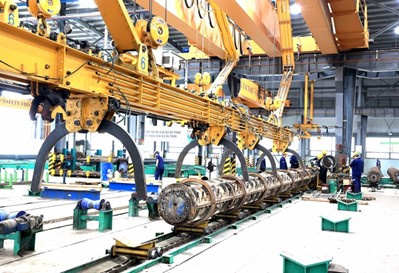
AJCEP and VJEPA
With Japan, the AJCEP, effective since December 1, 2008, and the VJEPA, effective since October 1, 2009, have significantly boosted bilateral trade relations. Thanks to the coordination between AJCEP and VJEPA, Vietnam’s exports to Japan have grown by an average of 10% annually since 2009.
In 2021, bilateral trade between Vietnam and Japan exceeded $42 billion, accounting for more than 6% of Vietnam's total import-export turnover. By 2022, this figure rose to nearly $50 billion, positioning Japan as Vietnam's fourth-largest trading partner, with exports reaching $24.2 billion, a 20.3% increase from the previous year. In 2023, export turnover to Japan maintained a high level at $23.31 billion. Over the past decade, Vietnam's exports to Japan surged from $14.7 billion in 2014 to $23.3 billion in 2023.
Significantly, the structure of exports to Japan has shifted from garments, footwear, and agricultural products to processed and manufactured industrial goods. In 2022, processed and manufactured products accounted for 76% of total export value, with key items including transportation equipment, machinery, electronics, and components.
The utilization rate of C/O under multilateral and bilateral FTAs with Japan remains high, at approximately 37%, second only to South Korea.
Common Features and Prospects
Trade relations between Vietnam-South Korea and Vietnam-Japan share two common characteristics:
- Vietnamese enterprises effectively leverage tariff preferences through C/O utilization.
- Vietnam’s exports have transitioned from resource-based industries to processed and manufactured industrial goods.
These shifts have been driven by FTAs that not only reduce tariffs but also open doors for investments from South Korea and Japan into Vietnam.
Moreover, Vietnam has established export strategies through the distribution channels of foreign-invested enterprises in Vietnam. For instance, the Ministry of Industry and Trade has partnered with Lotte Mart and AEON to promote Vietnamese products in South Korean and Japanese retail systems, aiming to achieve $1 billion in exports through AEON by 2025.
The growth potential in these FTA markets remains substantial. Leveraging and synergizing bilateral and multilateral FTAs with Japan and South Korea will continue to be a driving force for growth in the future.