


Tổng số bài đăng 476.
The recent World Economic Outlook report from the International Monetary Fund (IMF) has adjusted the economic growth forecast for the Asia-Pacific region upward by 0.1% compared to the report released in April, predicting a growth rate of 4.6% for 2024.
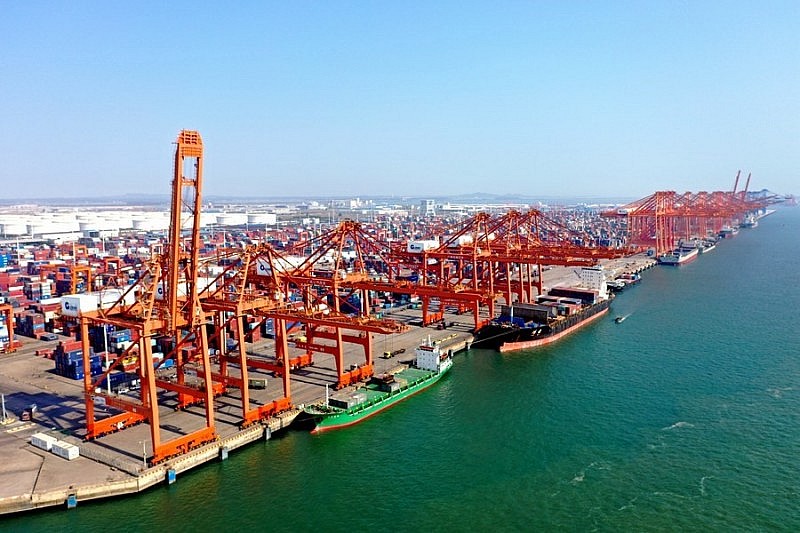
According to the IMF, the Asia-Pacific region is expected to contribute 60% of global economic growth in 2024, driven by a structural shift toward high-productivity sectors such as tradable services, while noting that "strength remains concentrated in emerging market economies."
The IMF has raised its growth forecast for India by 0.2% to 7%, thanks to a bumper harvest and expanding public infrastructure investments. The IMF stated, " India remains the world's fastest growing major economy."
ASEAN's growth is projected to be "robust", reaching 4.6% in 2024 and 4.7% in 2025, largely supported by robust domestic demand and strong exports.
For China, where private consumption demand has stagnated, the IMF has lowered its growth forecast for 2024 to 4.8%, due to disappointing domestic demand from April to June.
The growth forecast for the Asia-Pacific region in 2025 has also been increased by 0.1% to 4.4%, as expected monetary policy easing is likely to boost private demand, particularly in advanced economies.
Despite the slightly improved forecast, the IMF warns that " the risk landscape has deteriorated since April," citing increasing geopolitical tensions, China's ongoing property market correction, and other uncertainties surrounding regional and global economies. Donald Trump, for instance, is touting a 60% tariff on imports from China and 10% from all other countries if he is reelected in next week's U.S. presidential election.
According to the IMF, prolonged recession in China would "harm both the region and the global economy," as the continuous downward pressure on prices in China could weaken competitiveness in countries with similar export structures, leading to trade tensions. Although China has " a big problem" in the real estate sector, it can be addressed " with the right kind of policy reforms and policy measures" since this issue is localized. The IMF recommends that Beijing provide support equivalent to about 5.5% of gross national product over four years to rehabilitate the housing sector. The IMF emphasized that "China's policy response is critical," as stimulating production and exports could exacerbate tensions, while facilitating adjustments in the real estate sector and encouraging private consumption will contribute to economic growth.
(Source: Nikkei Asia)