


Tổng số bài đăng 490.
FTI warns that Thailand could fall from the second- to the fifth-largest ASEAN economy within five years due to slow structural reforms, geopolitical risks, and rising household debt. The organization urges rapid industrial transformation and stronger digital and AI skills to maintain competitiveness.
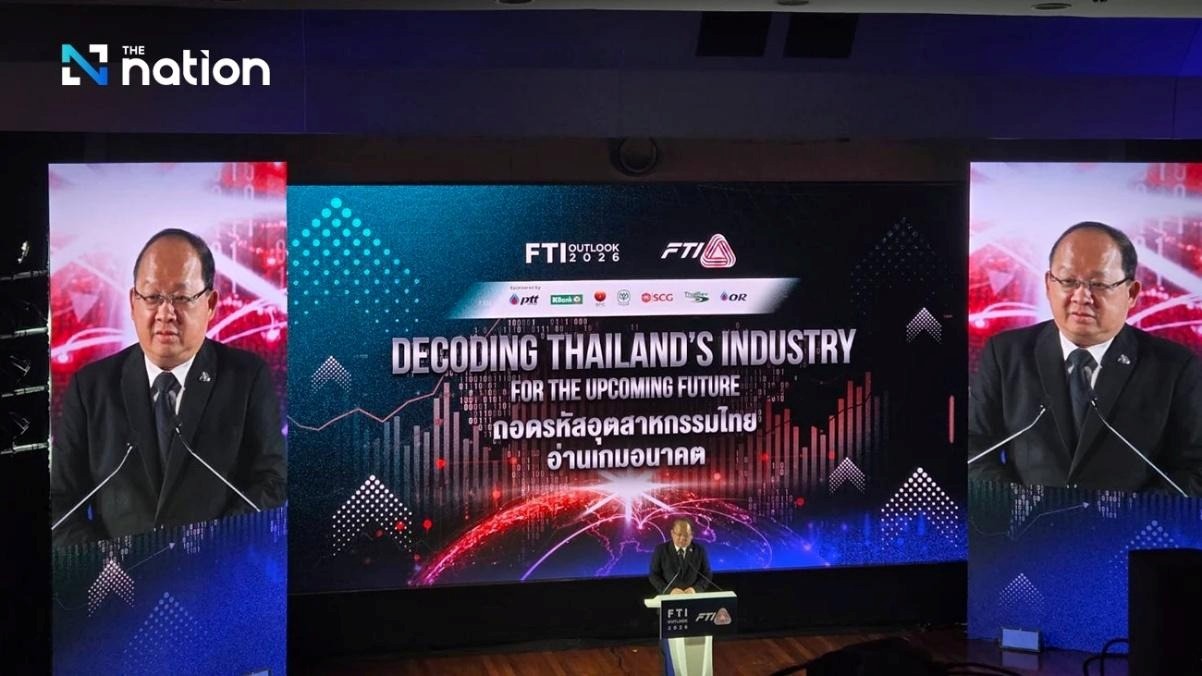
The Federation of Thai Industries (FTI) has warned that Thailand may drop from its position as ASEAN’s second-largest economy to fifth place within the next five years if the country fails to deliver breakthrough reforms in structural transformation and industrial upgrading. The warning comes as Thailand’s GDP growth slowed sharply to 1.2% in the third quarter, highlighting mounting challenges for an economy heavily dependent on exports.
Speaking at the “FTI Outlook 2026” forum, FTI Chairman Kriengkrai Thiennukul noted that the industrial confidence index has remained below 100 for 13 consecutive years, reflecting prolonged concerns among the business community. He stressed that Thailand is confronting significant structural inertia and must accelerate its shift toward next-generation industries.
The experts identified two major groups of pressures shaping Thailand’s economic outlook. The first relates to growing geopolitical volatility and fragmentation, marked by the rise of global protectionism—often referred to as “Trumpism”—alongside efforts to de-dollarize international trade and shifts in the economic strategies of major powers. These dynamics are reshaping global trade patterns, investment flows, and supply-chain structures. At the same time, China’s “involution,” characterized by intensified domestic competition and reduced outward economic expansion, could weaken external demand for Thai exports. The second pressure stems from rapid technological disruption, particularly the evolution of artificial intelligence. Experts noted that the current AI S-curve may reach its peak within the next five years, giving way to widespread application or new technological paradigms. In this context, Thailand must prioritize developing a workforce proficient in AI while also strengthening human-centered capabilities such as critical thinking, creativity, problem-solving, and interpersonal skills—areas where AI cannot easily substitute human labor.
Socioeconomic Impacts: Household Debt and SME Vulnerability
During the “CEO Vision for the Future” panel, representatives from major corporations—including Thai Summit Group, PTTEP, and TMBThanachart Bank—highlighted several significant economic risks, notably the challenges posed by high household debt and the vulnerability of small and medium-sized enterprises. Piti Tantakasem of TMBThanachart Bank described household debt as “the tip of the iceberg,” noting that its rising burden is eroding domestic consumption and undermining the economy’s ability to withstand shocks. At the same time, SMEs are grappling with supply-chain disruptions, elevated capital costs, and limited digital capabilities, leaving them increasingly at risk of being pushed out of regional value chains if adequate support is not provided.
Based on the discussions at the forum, experts and business leaders outlined a set of priority measures to strengthen Thailand’s economic resilience and long-term competitiveness. They emphasized the need to transform traditional industries into next-generation sectors by promoting investment in high-tech manufacturing, high–value-added production, smart logistics, and sustainable supply chains, while also supporting innovation and technology upgrading within enterprises to enhance their integration into regional value chains. Strengthening digital and AI-related skills was identified as another essential pillar, requiring comprehensive reskilling and upskilling programs developed in collaboration with businesses, universities, and vocational institutions, as well as the cultivation of soft skills such as critical thinking, creativity, and complex problem-solving. To address immediate vulnerabilities, participants stressed the importance of stabilizing household finances and supporting SMEs through targeted credit measures, debt restructuring for at-risk groups, and tailored financial programs that enable SMEs to modernize, alongside improved consumer protection and greater transparency in the retail credit market. The forum also highlighted opportunities for Thailand to leverage its strengths in the care and longevity economy by expanding healthcare, medical tourism, and elderly-care services. Finally, in response to growing global fragmentation, experts recommended adjustments to foreign economic policy through the diversification of export and investment markets, deeper participation in regional trade agreements, and reinforced integration within ASEAN supply chains.
FTI and business leaders called for swift policy action that balances short-term support—such as easing pressure on household consumption and stabilizing finances—with long-term strategies focused on industrial transformation and skills development. They warned that without timely measures, Thailand faces a real risk of losing its current ranking within ASEAN and missing key opportunities for long-term growth.
Source: Compiled by the Multilateral Trade Policy Department, Ministry of Industry and Trade of Viet Nam