


Tổng số bài đăng 491.
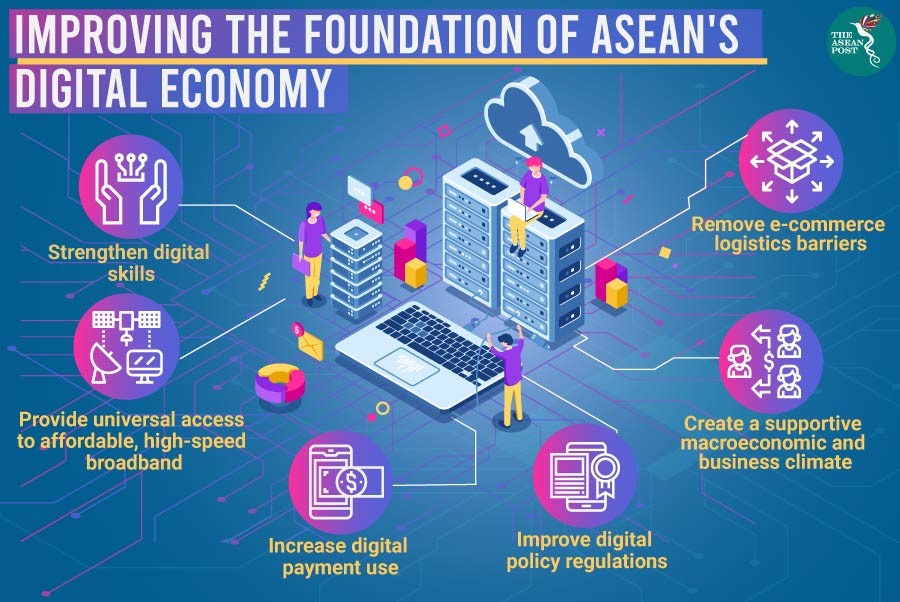
In their policy brief " Promoting Fair Competition in ASEAN’s Digital Economy: Strengthening Policies for a Level Playing Field", Mahirah Mahusin and Hilmy Prilliadi (ASEAN and East Asia Economic Research Institute (ERIA) expressed the views that competitive digital markets are critical for promoting innovation, reducing prices, and enhancing product quality and variety, benefiting consumers and businesses, especially MSMEs.
The ASEAN digital economy is currently dominated by major platform providers, both regional and international, such as Google, Microsoft, Amazon, Grab, GoTo, Shopee, and Lazada. Policymakers face the challenge of balancing market innovation for all businesses, including startups, while safeguarding public interests and maintaining fair digital market competition. Dominant digital platforms and the dynamics of platform-based business models can lead to anti-competitive behaviour, market manipulation, and higher barriers to entry.
ASEAN Member States (AMS) must tailor regulations specific to digital market competition, ensuring they are both tech- and sector-neutral to address evolving market dynamics effectively. While the AEC Blueprint 2025 seeks to advance regional integration, competition policies remain largely national, with variations in development levels and priorities.
Therefore, the two authors make some policy recommendations for ASEAN countries to promote fair competition in ASEAN’s digital economy as follows:
• Ensure DEFA provisions are adaptable to AMS capabilities while aligning with competition standards under the Regional Comprehensive Economic Partnership (RCEP) and the ASEAN Framework Agreement on Competition (AFAC).
• Work towards establishing ASEAN-wide competition policy objectives, fostering collaboration on enforcement priorities, and setting informal regional goals.
• Develop regional capacity-building programmes for regulators, covering tools, legal frameworks, investigative skills, and personnel exchanges for hands-on training.
• Review internal policies within AMS to facilitate cooperation and information exchange with Dialogue and External Partners, including protocols for confidentiality waivers.
• Increase collaboration between competition, consumer protection, and data protection agencies to support coordinated enforcement and create joint guidelines to balance competition remedies and privacy issues.
• Launch consumer education campaigns on digital rights, data protection, and anti- competitive practice awareness.
• Mandate transparency from digital platforms on algorithm usage and data practices to foster accountability and prevent anti-competitive behaviour.