


Tổng số bài đăng 486.
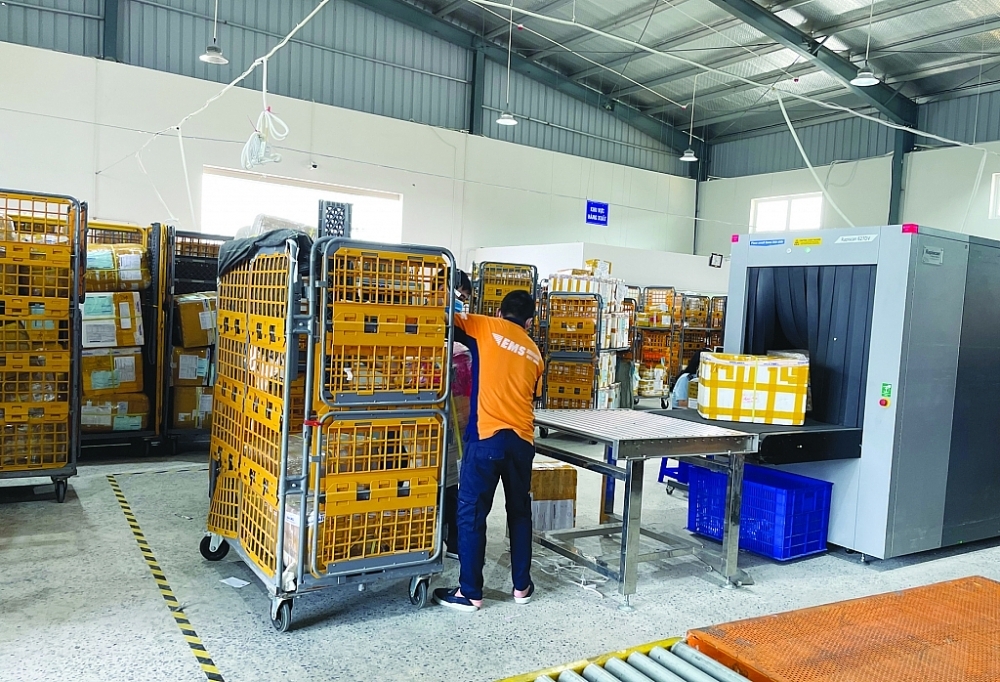 The shift from the traditional trade form to using digital and e-commerce platforms is an inevitable trend. When the appropriate customs control policy is issued, it will facilitate the development of cross-border e-commerce.
Inevitable trend
According to the Department of E-commerce and Digital Economy under the Ministry of Industry and Trade, Vietnam is a country that has a significant e-commerce development in the region. The global revenue in 2023 is expected to reach US$2,883 billion. Therefore, cross-border e-commerce will be an effective channel for enterprises to expand their market, especially for Vietnamese products.
The Covid-19 pandemic has proven that e-commerce is not only a useful tool or solution for consumers amid the public health crisis, but also a driving force for economic development. Therefore, the shift from the traditional trade to using digital and e-commerce platforms is an inevitable trend to help businesses survive and develop.
According to the report on the Vietnam E-commerce Index (EBI) from Vietnam E-commerce Association (VECOM) for five years (from 2016-2019), Vietnam’s average annual growth rate is 25-30%, the average growth rate for the 2015-2025 period is forecast to be 29% when the country’s e-commerce scale hits US$43 billion and ranks third in Southeast Asia after Indonesia and Thailand.
However, due to the high growth rate of e-commerce, the state management policies are required to be amended to be consistent with the development of e-commerce activities, especially e-commerce for exports and imports.
To amend and complete the legal corridor for e-commerce development, fulfill international commitments, streamline customs procedures and meet the requirements of customs control for imports and exports in e-commerce transactions, the Ministry of Finance has focused on perfecting a draft decree regulating customs control for imports and exports in e-commerce transactions. The draft has been appraised by the Ministry of Justice and submitted to the Government for feedback from members of the Government before being promulgated.
Facilitating procedures
According to Deputy Director of the Customs Control and Supervision Department Nguyen Bac Hai, the draft Decree stipulates key contents such as specifying the scope of management on trading floors and e-commerce websites, transporters of goods transacted via e-commerce.
The decree also provides regulations on tax and commodity policies for imports transacted via e-commerce, specifically the exemption from tax, permit and specialized inspection for certain imports.
The draft Decree provides regulations to ensure information related to goods transactions for goods control when the order is made until the goods are cleared (for imports) or the actual quantity of goods. The draft decree stipulates the classification of commodity groups and specific customs procedures for each group to ensure simple customs declaration procedures and quick customs clearance.
The draft Decree specifies the rights and obligations of the entities. For example, trading floors, e-commerce websites or authorized units must submit information on goods orders to the system before carrying out customs procedures.
According to the Department, when the Decree comes into practice, it will create favorable conditions and contribute to promoting the development of e-commerce.
It will encourage buyers because they are exempt from import tax and specialized management. The customs declarant will accept the actual goods price as a basis for tax calculation after providing full information.
Customs declarants that are postal, express delivery operators or customs brokers will implement customs procedures for each goods group and are allowed to make many orders in a declaration form, thereby facilitating customs clearance.
Customs will be provided with full information related to exports and imports via e-commerce, advance information on the goods, helping customs apply risk management to decide on customs inspection, and supervision for the goods.
Deputy Director Nguyen Bac Hai said this is the first decree that regulates customs control for goods via e-commerce. When the Decree takes effect, it will create a specific legal corridor for related parties in implementation. The regulations in the draft decree are consistent with the nature of goods transacted via e-commerce, as well as international commitments and the e-commerce framework of the World Customs Organization.
When the Decree is promulgated, it will contribute to boosting e-commerce transactions because there are preferential policies for these goods, classification of customs procedures to ensure the fastest customs clearance, and simple customs procedures.
Source: Customs News