

Total number of posts 487.
Given the recent entry into force of the upgraded ASEAN–Australia–New Zealand Free Trade Agreement (AANZFTA), Viet Nam, Thailand and the Philippines have officially launched the process of transposing their services schedules from “positive list” to “negative list” via initiating and participating in the activity “Developing the Regional Guideline For transitioning from positive listing to negative listing approach in Trade in Services Commitment in the AANZFTA Upgrade”, supported by the Regional Trade for Development (RT4D) Programme funded by Australia and New Zealand. This is not only to fulfil the obligation under the upgraded AANZFTA, but also to ensure the effective implementation of similar commitments under other FTAs, including the Regional Comprehensive Economic Partnership (RCEP) Agreement and the ASEAN Trade in Services Agreement (ATISA).
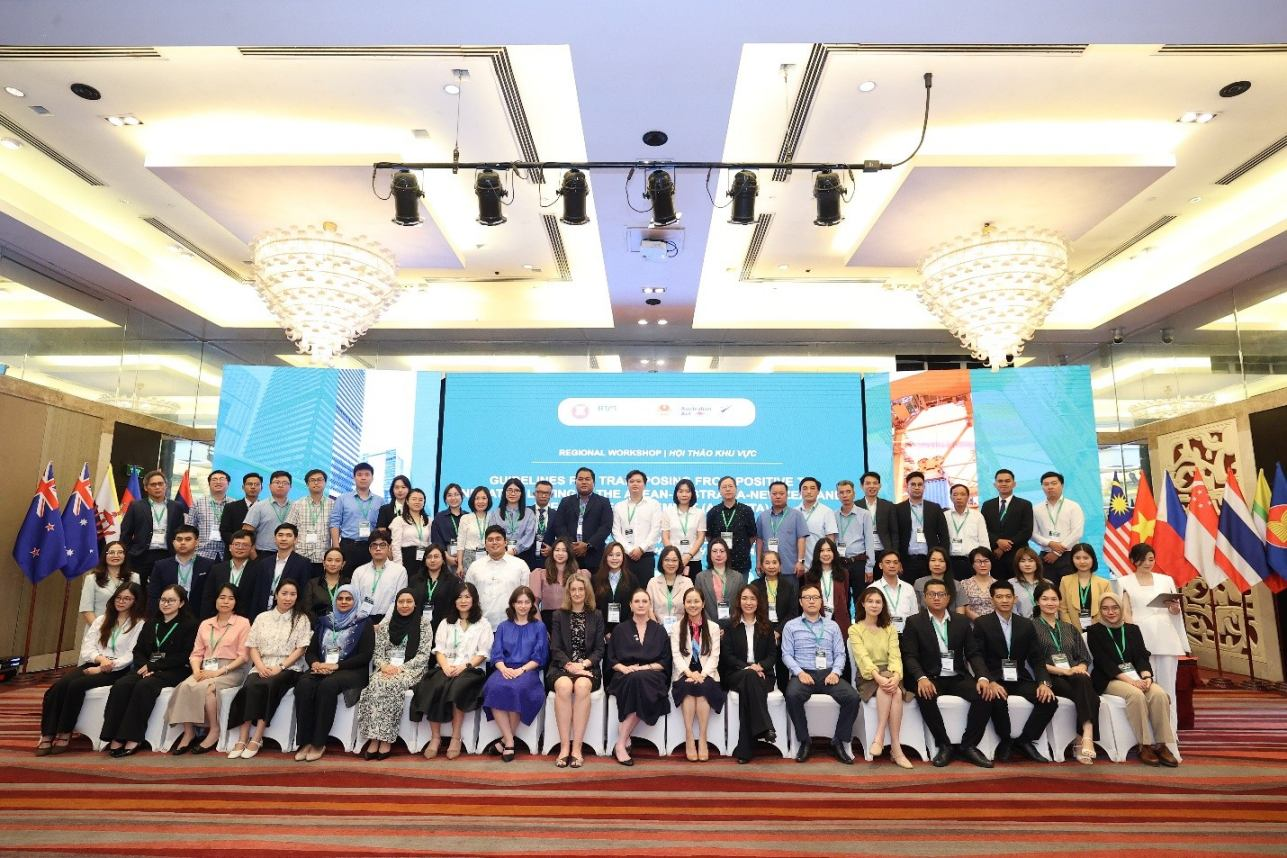
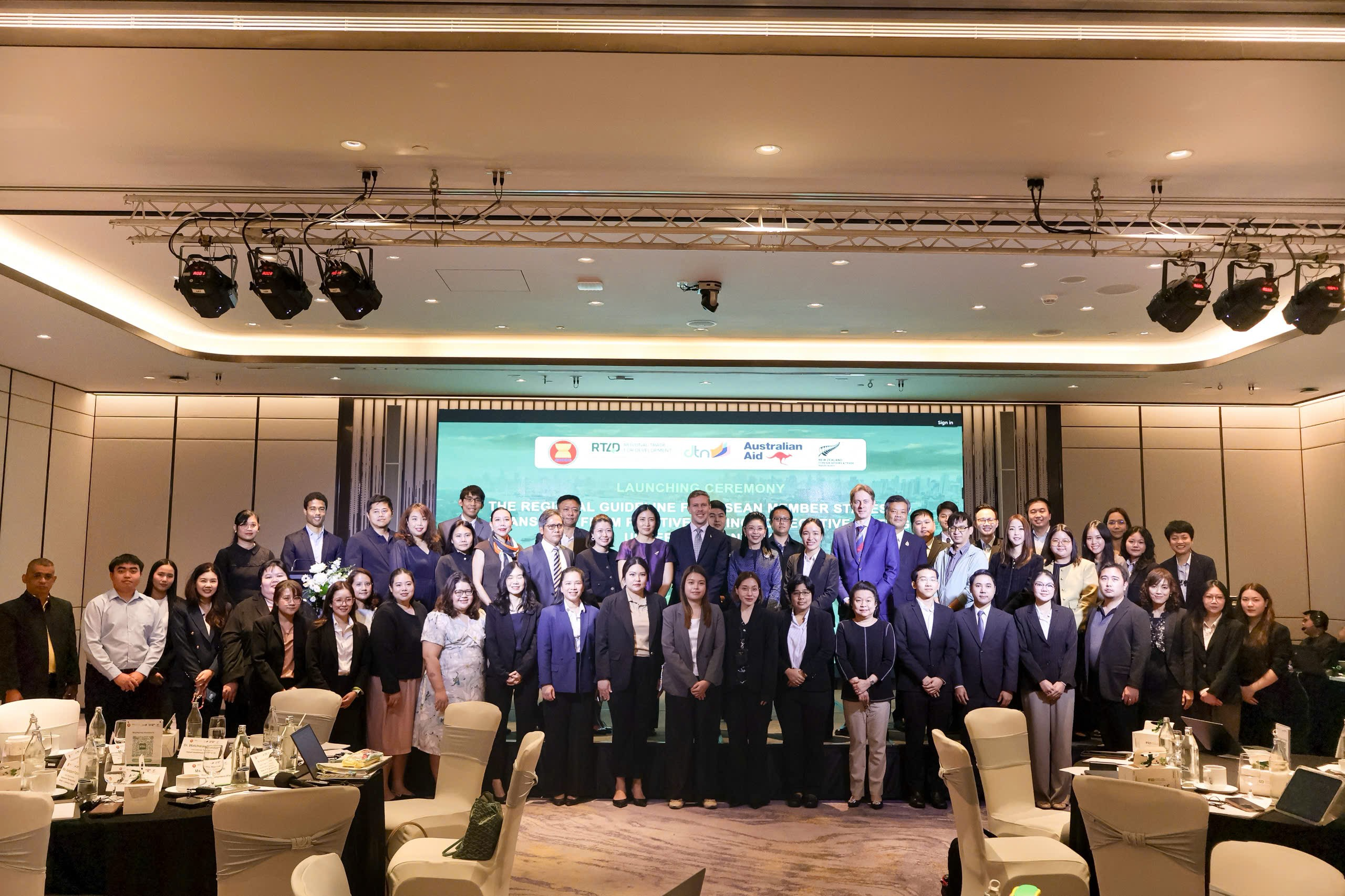
Respectively, on 12–13 June 2025 in Hanoi; 26 August 2024 in Ho Chi Minh City; 29 August 2025 in Hai Phong; 22 October 2025 in Bangkok, Thailand; and 21 November 2025 in Manila, the Philippines, within the framework of the activity “Developing the Regional Guideline For transitioning from positive listing to negative listing approach in Trade in Services Commitment in the AANZFTA Upgrade”, the RT4D Programme, in cooperation with the Ministry of Industry and Trade of Viet Nam and the relevant line ministries and agencies of Thailand and the Philippines, organized a series of regional and in-country workshops. These workshops aimed to disseminate and exchange views on the Regional Guideline for the transposition of services schedules. The workshops attracted strong interest and broad participation from representatives of ministries and agencies responsible for negotiating services schedules, relevant institutions, as well as representatives of business and industry associations interested in this discussion.

The activity on developing the Regional Guideline For transitioning from positive listing to negative listing approach in Trade in Services Commitment in the AANZFTA Upgrade was initially proposed by Viet Nam to the RT4D Programme, with Thailand and the Philippines—countries sharing similar commitments with Viet Nam regarding services schedule transposition under the upgraded AANZFTA, RCEP and ATISA—later joining as beneficiary countries.
As the initiating country, and drawing on its prior experience in adopting negative list–based services commitments under several FTAs such as the Comprehensive and Progressive Agreement for Trans-Pacific Partnership (CPTPP) and the Viet Nam–Israel Free Trade Agreement, Viet Nam has demonstrated a leading role in this initiative. This role is reflected in efforts ranging from reviewing the legal framework and relevant regulatory instruments to assess readiness for implementation, to sharing practical experience in drafting negative list–based services schedules for incorporation into the Guideline, as well as hosting the regional workshop to disseminate the Regional Guideline. These activities have created an important forum for experience-sharing, standardizing approaches, and strengthening institutional capacity among ASEAN countries required to implement the conversion obligation, thereby enhancing transparency, predictability, and the attractiveness of services markets in the participating economies.
Positive List and Negative List Approaches in Services Commitments
Under the “positive list” approach, which has been applied in the WTO’s General Agreement on Trade in Services (GATS) and many earlier ASEAN FTAs covering trade in services, countries commit to liberalization only in those service sectors and sub-sectors explicitly listed in their schedules, together with specified conditions and limitations. Sectors not listed are, by default, excluded from binding commitments. While this approach allows governments to tightly control the scope of liberalization, it results in lower levels of transparency and predictability for businesses.
By contrast, under the “negative list” approach, all service sectors are presumed to be open and subject to core obligations such as national treatment and market access, unless explicitly listed as exceptions in the form of Non-Conforming Measures (NCMs). These NCMs are consolidated into reservation lists, typically divided into List A (existing measures) and List B (policy space for measures that may be adopted in the future).
The Regional Guideline emphasizes that the transposition to a negative list approach is not merely a technical change in the format of services schedules, but represents a fundamental shift in policy mindset—from treating liberalization as the exception to treating it as the default. This approach significantly enhances transparency, enables service suppliers and investors to clearly identify remaining restrictions, and “locks in” reforms through mechanisms and principles such as the standstill and ratchet clauses.
Commitments of Viet Nam, Thailand and Philippines to transpose Services Schedules under Relevant FTAs
Under the upgraded AANZFTA, Viet Nam, Thailand and the Philippines commit to transposing their services schedules to the negative list approach in accordance with the roadmap set out in the Second Protocol amending the Agreement. Specifically, the parties are required to commence negotiations within one year from the entry into force of the Protocol and to complete the conversion within two years, while ensuring that the level of liberalization is no less than that under current commitments.
Similar commitments have been undertaken by Viet Nam, Thailand and the Philippines under RCEP and ATISA. RCEP allows the parallel application of both approaches during an initial period, but requires all members to shift to the negative list approach within six years. ATISA—the ASEAN intra-regional services agreement—goes even further by establishing the negative list as the default approach and applying a ratchet mechanism to ensure the progressive nature of services liberalization.
Preliminary Assessment of Readiness
The Regional Guideline highlights notable differences in the level of readiness among Viet Nam, Thailand and the Philippines. Viet Nam is assessed as having a relatively high level of readiness, owing to its experience with negative list–based services commitments under previous FTAs (such as CPTPP and VIFTA), a relatively well-established coordination mechanism led by the Ministry of Industry and Trade, and extensive legal reviews conducted across multiple services sectors. Nevertheless, Viet Nam’s key challenge lies in ensuring consistency across overlapping agreements and managing sensitive sectors governed by multiple ministries and agencies.
Thailand is assessed as having a medium level of readiness, with significant progress in recent years through capacity-building activities and inter-agency consultations. However, a fragmented legal framework and complex coordination among regulatory authorities remain major challenges in compiling comprehensive and accurate NCM lists.
The Philippines has a certain foundation through its Foreign Investment Negative List and recent reforms in the services sector, but continues to face constitutional restrictions on foreign ownership in several key sectors. This necessitates the careful design of appropriate reservations and further strengthening of technical capacity during the conversion process.
RT4D and the Role in Supporting the Implementation of RCEP and the Upgraded AANZFTA
RT4D (Regional Trade for Development) is an economic and technical assistance initiative funded by the Governments of Australia and New Zealand, playing a central role in supporting ASEAN countries in implementing and maximizing the benefits of two major FTAs—RCEP and the upgraded AANZFTA—including obligations related to the transposition of services schedules.
As of 2025, the programme manages a commitment envelope of approximately USD 48.7 million (with contributions of AUD 46.3 million from Australia and NZD 2.1 million from New Zealand) and runs until 2028. RT4D focuses on key areas of technical assistance, including the provision of in-depth technical support, skills training, and policy advisory services for ASEAN economies, with particular priority given to countries such as Viet Nam, Cambodia and Lao PDR; promoting sustainable development with an emphasis on green growth, the circular economy, support for micro, small and medium-sized enterprises, and the empowerment of women and persons with disabilities in trade./.
Source: Compiled by the Multilateral Trade Policy Department, Ministry of Industry and Trade of Viet Nam