

Total number of posts 495.
ASEAN+3 faces a transformative opportunity to strengthen its position in the global critical minerals supply chain, leveraging ASEAN’s resource potential and the capital and technology of China, Japan, and South Korea. The United States is seeking alternative supply sources through cooperation with Malaysia and Thailand, while China maintains overwhelming dominance in rare earth mining and processing. The region, however, faces major hurdles including high investment costs, limited processing technology, and long mine development timelines. To seize this opportunity, ASEAN+3 must enhance coordination, attract funding, and build a sustainable value chain.
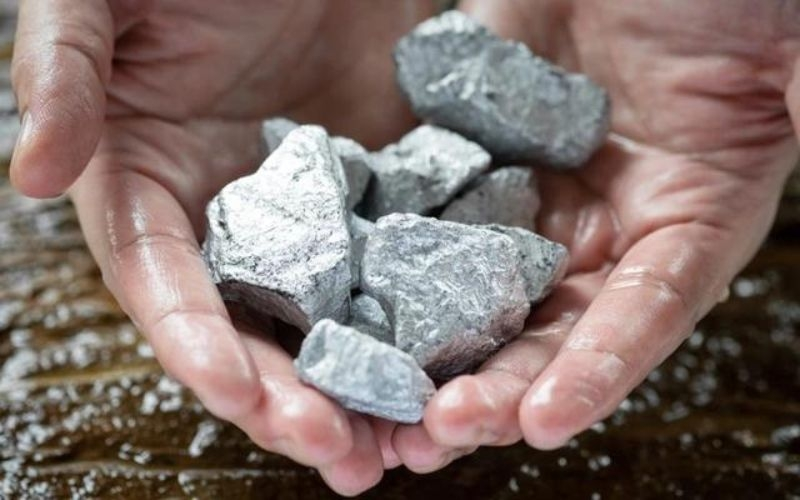
ASEAN and its partners China, Japan, and South Korea are standing before a “transformative opportunity” to deepen their participation in the global critical minerals supply chain — a sector that plays a vital role in high-tech manufacturing, electric vehicles, and aerospace industries.
The assessment was made by Yasuto Watanabe, Director and CEO of the ASEAN+3 Macroeconomic Research Office (AMRO), amid intensifying geoeconomic competition surrounding rare earths and other strategic minerals.
Resource Potential and Strategic Positioning
According to Watanabe, several Southeast Asian economies possess significant mineral reserves, while the region’s geographic location sits at the heart of crucial global trade routes. The combination of ASEAN’s natural resources and the technological and financial strengths of China, Japan, and South Korea present an opportunity for the bloc to secure a stronger position in the mineral value chain.
“Viewed through an ASEAN+3 lens, the opportunity is transformative,” Watanabe emphasized.
China currently accounts for 70% of the world’s rare earth mining and 90% of processing capacity, according to the Centre for Strategic and International Studies (CSIS). This dominance has pushed Washington to search for alternative sources, including those in Southeast Asia.
U.S. Expands Outreach, China Still Leads
In October, the United States signed memorandums of understanding with Malaysia and Thailand to secure supplies of critical minerals, particularly rare earth elements — essential for producing permanent magnets and other advanced components.
Malaysia stands out as one of the few countries in the region with existing processing capacity, giving it an advantage over economies that mainly possess raw deposits.
However, experts note that while ASEAN has potential, catching up with China — which has spent decades building a fully integrated rare earth industry — remains difficult. Professor Liang Yan of Willamette University said Southeast Asian countries lack the required processing technology, though China may eventually provide support through investment and technology transfer, especially under the Belt and Road Initiative (BRI).
Massive Costs, Significant Risks
According to Deepali Bhargava, ING’s Chief Economist for Asia-Pacific, developing a competitive critical minerals supply chain requires enormous capital investment and a long development timeline. It can take up to 10 years for a new rare earth mine to reach export-ready capacity.
“To play a significant role in global supply chains, the region must overcome huge upfront exploration costs and ensure funding across the entire value chain,” Bhargava noted. She added that ASEAN+3 must also prioritize autonomy and regional coordination to avoid overdependence on any single partner.
Big Opportunity, But Hard to Capture
Experts say ASEAN+3 is well-positioned: demand for critical minerals continues to surge, advanced economies are searching for alternative supply sources, and the region has both natural resources and technologically capable partners within the bloc.
However, capturing this opportunity will require a long-term strategy that includes technology cooperation, capital mobilization, processing capacity building, and sustainable value-chain development.
Despite the challenges, this remains a rare chance for ASEAN+3 to strengthen its position in the global critical minerals landscape — a domain increasingly tied to industrial power and economic security in the 21st century.
Source: Compiled by the Multilateral Trade Policy Department, Ministry of Industry and Trade of Viet Nam