

Total number of posts 472.
On 27 April 2026, the Special ASEAN Ministers on Energy Meeting (AMEM) on the latest situation in the Middle East was convened virtually under the chairmanship of H.E. Sharon S. Garin, Secretary of the Department of Energy of the Philippines, as ASEAN Chair 2026. The Meeting was attended by ASEAN Energy Ministers, the ASEAN Secretariat, the ASEAN Centre for Energy (ACE), the ASEAN Council on Petroleum (ASCOPE), the International Energy Agency (IEA), and relevant agencies. The Vietnamese delegation to the Meeting comprised representatives from the Ministry of Industry and Trade (Multilateral Trade Policy Department, Oil, Gas and Coal Department, and the Electricity Authority of Viet Nam) and the Ministry of Foreign Affairs.
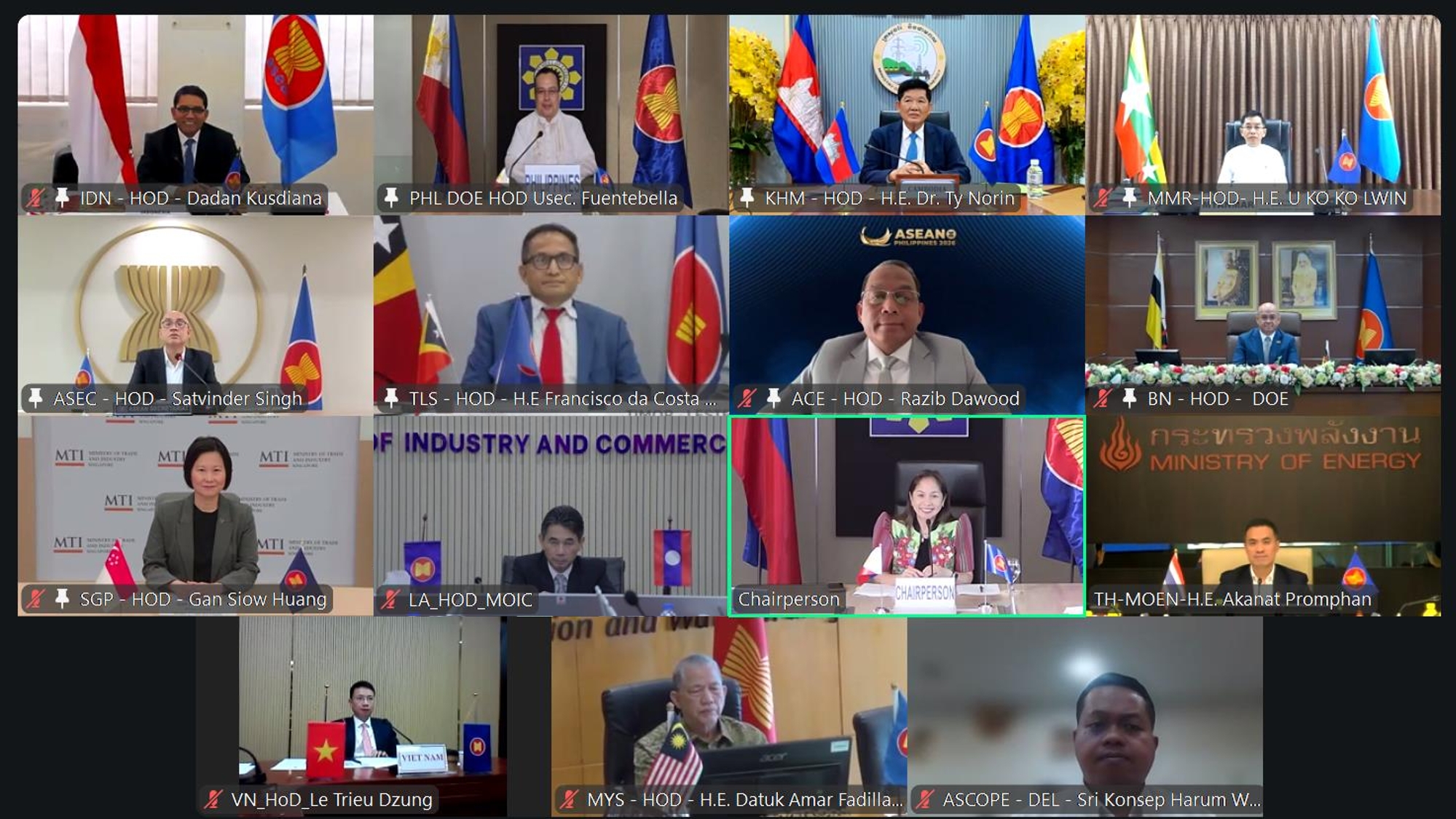
At the Meeting, the Ministers exchanged views on the latest situation in the Middle East and assessed its implications for regional energy security, particularly as ASEAN remains a net energy-importing region and continues to be vulnerable to fluctuations in oil and gas supply, energy prices, and disruptions to global supply chains. The Ministers underscored the importance of maintaining uninterrupted energy flows, ensuring maritime safety and security, and safeguarding freedom of navigation along strategic shipping routes in accordance with international law, in particular the 1982 United Nations Convention on the Law of the Sea (UNCLOS 1982).
Participating the Meeting, the International Energy Agency (IEA), the ASEAN Centre for Energy (ACE), and the ASEAN Council on Petroleum (ASCOPE) provided updates, data, and assessments on the global and regional energy outlook, with a focus on potential risks to energy markets, supply, and regional supply chains. They also shared assessments and recommendations aimed at strengthening monitoring, early warning, coordinated response, and the maintenance of energy security and stability in ASEAN.
Amid the widespread impact of energy supply disruptions on many ASEAN Member States, the ASEAN Energy Ministers reaffirmed ASEAN’s shared responsibility to safeguard regional energy security through enhanced regional coordination and cooperation, as well as the timely implementation of policy measures to strengthen regional security and resilience. In this regard, the Ministers underscored the importance of the ASEAN Petroleum Security Agreement (APSA) as a key regional cooperation mechanism to facilitate information sharing, coordinated response, and mutual support in the event of supply disruptions.
The Ministers also reaffirmed their commitment to maintaining an open, inclusive, and rules-based regional energy cooperation framework, while strengthening cooperation with Dialogue Partners, international organisations, and relevant stakeholders. They tasked the ASEAN Centre for Energy (ACE), the ASEAN Council on Petroleum (ASCOPE), and relevant agencies to continue closely monitoring developments in global energy markets, enhance information sharing, and coordinate with the Senior Officials Meeting on Energy (SOME) to strengthen preparedness and ensure timely response.
In the longer term, the Meeting underscored the urgent need to strengthen ASEAN’s energy self-reliance through the implementation of the ASEAN Plan of Action for Energy Cooperation 2026–2030, diversification of energy supply sources, promotion of intra-ASEAN energy trade, enhanced regional infrastructure connectivity, accelerated development of renewable energy, biofuels, and electric vehicles, as well as the advancement of the ASEAN Power Grid (APG) and the Memorandum of Understanding on the Trans-ASEAN Gas Pipeline (TAGP), thereby contributing to a more sustainable and resilient regional energy security framework.
At the conclusion of the Meeting, the Ministers adopted the Joint Statement of the Special AMEM on the latest situation in the Middle East, reaffirming ASEAN’s commitment to strengthening coordination, maintaining the stability of regional energy markets, and providing strategic direction on measures to enhance the region’s preparedness and resilience against external shocks./.
Source: Multilateral Trade Policy Department, Ministry of Industry and Trade.