

Total number of posts 487.
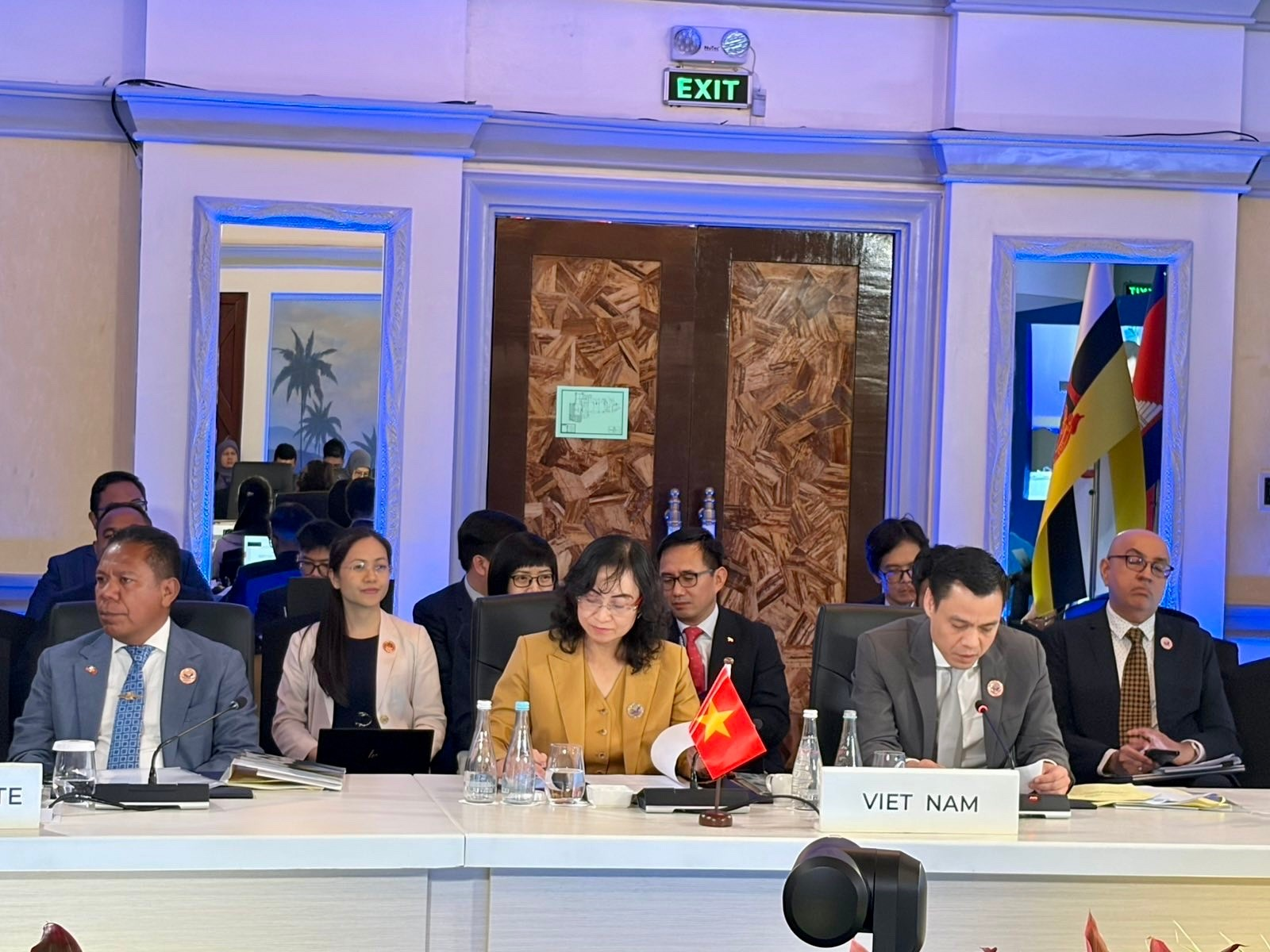
On the afternoon of May 7, 2026, the ASEAN Joint Foreign and Economic Ministers’ Meeting took place in Cebu City, Philippines, chaired by Ms. Theresa P. Lazaro, Minister of Foreign Affairs of the Philippines, and Ms. Cristina Aldeguer-Roque, Minister of Trade and Industry of the Philippines, the ASEAN Chair for 2026. The meeting was attended by the Foreign Ministers and Economic Ministers of ASEAN countries and the ASEAN Secretary-General. Viet Nam delegation was led by Deputy Minister of Foreign Affairs Dang Hoang Giang and Deputy Minister of Trade and Industry Phan Thi Thang, along with representatives from various departments of the Ministry of Foreign Affairs and the Ministry of Trade and Industry.
At the Meeting, the Foreign and Economic Ministers heard reports and exchanged views on the multifaceted impacts of the Middle East conflict on energy security, food security, and regional economy. Ministers expressed deep concern about escalating tensions and agreed that ASEAN needs a common voice, upholding international law and the region's central role. The Meeting also focused on sharing information, exchanging experiences, and proposing strategic solutions to better respond to current and future crises.
Foreign Ministers prioritized issues such as urging all parties to exercise restraint, immediately ending hostile actions, efforts to ensure the safety and well-being of citizens, and the implementation of emergency humanitarian relief mechanisms. Ministers also proposed establishing a communication and coordination channel for ASEAN Foreign Ministers to ensure timely crisis response, enhance early warning capabilities, strategic forecasting, and utilize ASEAN-led mechanisms (such as ASEAN+3 and the East Asia Summit) to promote multilateral cooperation.
For economic channel, Ministers emphasized that ensuring energy and food security is a top priority. The meeting agreed to accelerate cross-border infrastructure connectivity projects such as the ASEAN Power Grid (APG) and the Trans-ASEAN Gas Pipeline (TAGP) to ensure uninterrupted supply chains. Simultaneously, regional food and fertilizer reserve mechanisms will be reactivated and expanded to ensure people's livelihoods and stabilize production costs for businesses.
Viet Nam’s delegation made positive contributions at the Meeting, emphasizing the promotion of economic cooperation and supply chain self-reliance through enhanced intra-ASEAN economic cooperation and deepening relations with dialogue partners; accelerating energy cooperation frameworks and emergency mechanisms; and speeding up the implementation of key ASEAN energy cooperation frameworks such as the ASEAN Power Grid (APG), the ASEAN Framework Agreement on Oil and Gas Security (APSA), and the Trans-ASEAN Gas Pipeline (TAGP). Developing and strengthening coordinated emergency response mechanisms to ensure timely collective action when supply chains are disrupted, alongside diversifying supply sources and building strategic reserves, requires enhanced inter-pillar coordination and information sharing, particularly between the Diplomatic and Economic pillars, to ensure the consistency and effectiveness of policy responses.
At the Meeting conclusion, Ministers unanimously adopted the draft ASEAN Leaders' Statement on Responding to the Middle East Crisis, thereby affirming the solidarity and resilience of the Community, ASEAN's determination to shift from a passive to an active response, building long-term strategies, and ensuring a peaceful, stable, and sustainable region. The Statement is expected to be submitted to the 48th ASEAN Summit on May 8, 2026./.
Source: Compiled by the Multilateral Trade Policy Department, Ministry of Industry and Trade of Viet Nam