

Total number of posts 491.
| Title | Date |
|---|---|
| EU – India agreed to resume FTA negotiations | 17-05-2021 |
| Israel and South Korea signed Free Trade Agreement | 17-05-2021 |
| UKVFTA officially enters into force | 17-05-2021 |


In the new era of global geopolitics and economics, Viet Nam is facing a historic turning point. No longer simply a "factory" relying on cheap labor, Vietnam is undergoing a strong transformation to become a deeply integrated ecosystem where institutions and technology play a "backbone" role in sustainable development. With the strategic goal of bringing its investment and business environment into the top 3 ASEAN countries by 2028, Viet Nam not only demonstrates ambition but also affirms its determination to comprehensively reform and break through in the race to attract a new generation of FDI.
The Current Situation: Surpassing the "cheap labor" threshold and entering the institutional race
For many years, Viet Nam has consistently been recognized by the international community as a "rising star" thanks to its high growth rate and political stability. Currently, Vietnam has risen to become the 4th largest economy in Southeast Asia and the 2nd largest in the region in terms of purchasing power parity (PPP). However, as multinational corporations restructure their supply chains under the "China+1" strategy, competition among ASEAN countries has shifted from "low price" to "quality of the ecosystem."

In fact, Viet Nam is currently in the Top 5 ASEAN countries for business environment, ranking behind Singapore, Malaysia, and Thailand in many institutional indicators. While Malaysia is accelerating in the semiconductor sector, Indonesia is focusing on the electric vehicle ecosystem, and Thailand maintains its position as a major automotive manufacturing hub, Viet Nam has established itself as a crucial manufacturing link in the global high-tech value chain. However, experts believe that the old advantage of low labor costs is gradually losing its effectiveness. Today's new generation of investors needs more than just policy forecasting: they need the ability to predict policies, transparency, speed of procedure processing, and quality digital infrastructure.
Reform “Leverages” and the Digital Impact
To realize the goal of being in the Top 3 of ASEAN and Top 30 in the world by 2028, the Vietnamese Government and National Assembly have issued groundbreaking policies. Resolution No. 25/2026/QH16 on the socio-economic development plan for the period 2026-2030 has set a target of average GDP growth of 10% or more per year, linked to the establishment of a modern development institution.
One of the most important changes is the strong shift in management methods from "pre-approval" to "post-approval". This not only helps reduce the administrative burden but also enhances the self-awareness and responsibility of businesses. Specific results from various ministries and agencies have demonstrated the effectiveness of this new approach:
- The Ministry of Agriculture and Environment has reduced processing time by over 51% and compliance costs by 52%, while also proposing the abolition of many conditional business sectors.
- The Ministry of Construction plans to abolish and decentralize 70 procedures, significantly reducing time and costs for businesses.
- The Ministry of Culture, Sports and Tourism has also abolished a series of licensing procedures in the printing and performing arts sectors, creating a more favorable environment for the creative economy.
In particular, digitalization is identified as the "backbone" and "institutional shortcut" for Vietnam to close the gap with leading countries. With the 5G technology platform and a leading mindset in digital cooperation within ASEAN, standardizing and digitizing the entire process of handling procedures electronically is helping to increase transparency in the system and eliminate informal costs.
New Generation FDI: Not Just Coming, But Wanting to Stay
In the current race to attract investment, Viet Nam is changing its approach: not just offering tax incentives, but upgrading the entire living and working ecosystem. New generation FDI demands a stable environment where international professionals and their families feel secure to live long-term. Building high-quality service ecosystems, from housing and healthcare to suitable cultural and religious spaces, is key to retaining high-quality capital flows.
Furthermore, Viet Nam's position within the ASEAN Economic Community (AEC) offers unparalleled advantages. As a member strictly implementing agreements such as ATIGA (98% tariff liberalization), ATISA (trade in services), and ACIA (investment), Viet Nam has created an open market, seamlessly connecting with major partners such as China, South Korea, Japan, and Australia through RCEP.
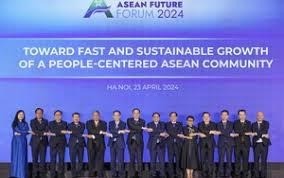
Future Directions: From Partial Reform to Systemic Reform
To truly break into the leading group, Viet Nam needs to thoroughly address the "reform paradox" – where policies change rapidly but the administrative apparatus's implementation capacity is sometimes slow and inconsistent. The direction for the 2026-2028 period will focus on the following bottlenecks:
- Ensuring consistency and transparency: Building a transparent and clear investment environment where regulations do not overlap between laws (such as the Investment Law and specialized decrees).
- Substantive reduction of compliance costs: Thoroughly eliminating formal "sub-licenses" that waste time and reduce the proactive capabilities of businesses.
- Developing modern infrastructure: Continuing strong investment in hard infrastructure (seaports, airports, nuclear energy) and soft infrastructure (legal services, logistics, highly skilled human resources) to support complex value chains.
- Strengthening decentralization and delegation of power: Promoting the closer access of public services to businesses and citizens, ensuring that ministries handle no more than 30% of the total administrative procedures.
The goal of reaching the Top 3 in ASEAN is not just a ranking, but a test of Viet Nam's reform capacity and readiness in the digital age. With solid political stability, an attractive market size, and a decisive reform roadmap, Viet Nam is currently in a "golden" period to close the gap with leading countries.
When the mindset for evaluating the effectiveness of laws shifts from "good in writing" to "good in practice," and when each government commitment is translated into tangible benefits for businesses, Viet Nam will certainly not only be a destination for capital flows, but also a center for value creation in the region and the world. This race may be challenging, but with a "dare to think, dare to act" spirit, Vietnam is confidently moving forward on its journey to becoming a self-reliant and prosperous economy./.
Source: Compiled by the Multilateral Trade Policy Department, Ministry of Industry and Trade of Viet Nam
Total number of posts 491.
| Title | Date |
|---|---|
| EU – India agreed to resume FTA negotiations | 17-05-2021 |
| Israel and South Korea signed Free Trade Agreement | 17-05-2021 |
| UKVFTA officially enters into force | 17-05-2021 |
Follow us




Did you find what you were looking for?
Can we ask you a few more questions to help improve the VNTR?