


Total number of posts 495.
ASEAN is rapidly advancing in AI, with Singapore and Malaysia leading the way, but uneven development risks widening the digital and economic gap. While AI offers major productivity gains, it may also disrupt jobs in less developed members. Stronger regional cooperation is needed to ensure AI drives inclusive, not uneven, growth.
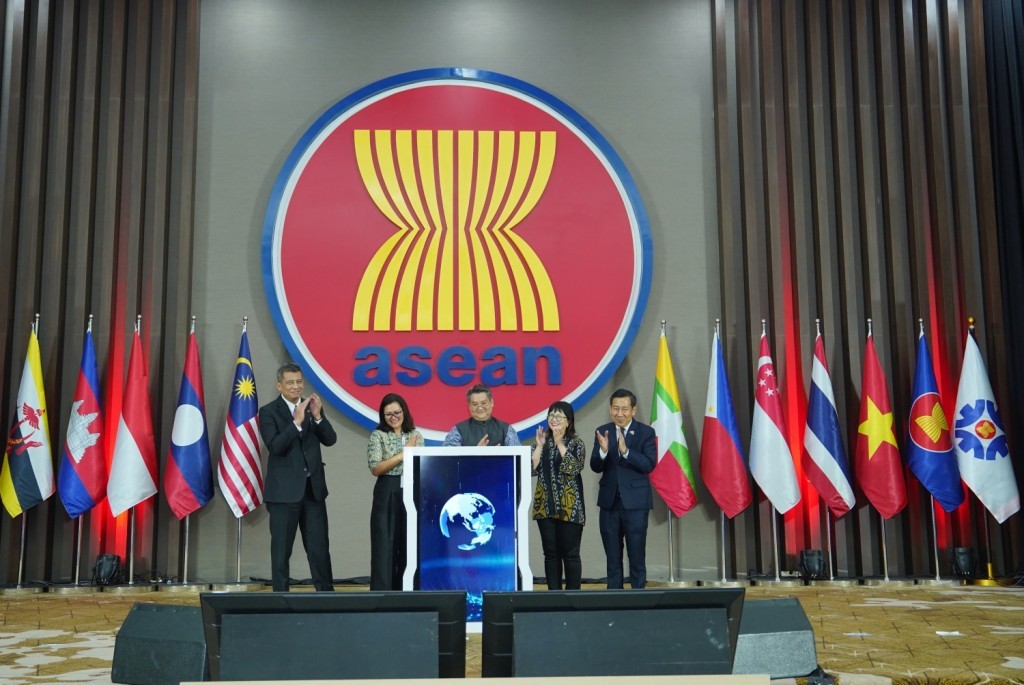
As artificial intelligence (AI) becomes the next major driver of global economic competitiveness, Southeast Asian nations are accelerating efforts to attract investment, build technological ecosystems, and strengthen their digital capacities. The entry of global technology giants into the region underscores ASEAN’s growing prominence as an emerging hub for AI research, development, and application. Yet alongside significant opportunities for productivity gains and economic expansion, experts warn that the uneven pace of AI adoption risks deepening existing economic and technological disparities among ASEAN member states.
In recent months, a new wave of AI-related investment has rushed into Southeast Asia. Google DeepMind announced the opening of its first research lab in Singapore—its third in the Asia-Pacific region—where researchers will work on enhancing models such as Gemini and improving language recognition for Southeast Asian languages. The move further cements Singapore’s position as the region’s AI leader. Similarly, Microsoft and Alibaba Cloud are expanding their presence through new labs and innovation hubs in Singapore and Malaysia. Malaysia, in particular, is emerging as a competitive data centre hub, currently accounting for more than half of all planned data centre capacity in ASEAN. These developments demonstrate that ASEAN is becoming an increasingly important link in the global AI value chain.
However, the technological landscape across ASEAN remains highly uneven. Singapore stands far ahead, attracting more than 55 percent of the region’s private AI investment and hosting 495 AI start-ups established since 2020. In stark contrast, the Philippines has only 10 such start-ups and Thailand just 20. Meanwhile, Cambodia, Laos, and Myanmar remain significantly behind due to weak digital infrastructure, limited skilled labour, and underdeveloped tech ecosystems. This widening gap raises concerns that AI-driven growth could exacerbate regional inequality, with advanced economies capitalizing on productivity gains while less developed members struggle to keep up.
The labour market implications of AI adoption also pose serious challenges for ASEAN. In countries where routine-based or manual work dominates the job structure, the risk of displacement is substantial. Studies estimate that up to 40 percent of tasks in the Philippines’ business process outsourcing (BPO) sector could be automated by generative AI. Given that the industry employs nearly two million workers and contributes around 7 percent of the national GDP, the potential disruption is considerable. Similarly, Indonesia, Thailand, and Vietnam are witnessing early signs of automation in retail, logistics, and transport sectors, as e-commerce optimisation tools and smart routing technologies replace certain human functions. While AI promises overall productivity gains, it may not generate enough new opportunities quickly enough to absorb displaced labour, creating short- to medium-term employment vulnerabilities.
The ability to build and deploy advanced AI systems also depends heavily on robust computing power, affordable GPU access, and stable electricity supplies—resources that many developing ASEAN countries lack. The soaring global demand for GPUs has driven up costs, putting high-performance AI systems out of reach for countries with limited budgets. The Philippines’s recurring power outages further underscore the infrastructural strain that energy-intensive data centres can impose. Experts caution that efforts by some governments to pursue AI sovereignty by building large models or stockpiling computational resources are economically unrealistic and strategically unwise. Excessive reliance on foreign technology providers also raises concerns about digital sovereignty and long-term dependence.
To ensure inclusive growth, analysts recommend a coordinated, cooperative approach across the region. Strengthening AI governance frameworks, improving data quality, and developing a digitally skilled workforce are seen as essential priorities. Regional initiatives such as Singapore’s Sea-Lion large language model—designed to support 13 Southeast Asian languages and downloaded over 230,000 times—illustrate how shared technological resources can help level the playing field. At the same time, ASEAN countries need to work together to address emerging risks, from deepfake-driven misinformation to AI-enabled cyberattacks and online radicalization, especially in countries with weaker regulatory systems.
Rather than competing to build large-scale AI models or replicate capabilities of tech superpowers, ASEAN states are encouraged to focus on specific segments of the AI value chain that align with their strengths and resource constraints. This could involve developing high-quality datasets, investing in talent development, expanding AI application in priority sectors, or improving national governance capacities. Policymakers must set realistic targets, evaluate the cost–benefit trade-offs of large-scale AI ambitions, and avoid pursuing sweeping visions of “AI-driven societal transformation” without the necessary foundations.
Ultimately, AI can become a powerful engine of growth for Southeast Asia—but only if the region can ensure that its benefits are widely shared. A coordinated approach that recognises each country’s role, fosters talent mobility, strengthens governance, and promotes equitable access to AI resources will be essential to avoid widening inequality and instability. As global competition intensifies, ASEAN must adopt a pragmatic and collaborative vision to shape an inclusive and sustainable digital future.
Source: Compiled by the Multilateral Trade Policy Department, Ministry of Industry and Trade of Viet Nam