

Total number of posts 494.
The ASEAN Federation of Cement Manufacturers (AFCM) unveiled the 2035 Decarbonisation Roadmap at its 46th Council Meeting was held on in Brunei from 15 to 17 October 2025, the world's first regional strategy for cement emissions cuts. Backed by the GCCA, it rests on four pillars: low-carbon cement expansion, clean energy boosts, CCUS tech adoption, and new materials. Targeting a 38Mt CO2 reduction by 2035, it prioritizes phasing out OPC and seeks government aid for green investments across member nations.
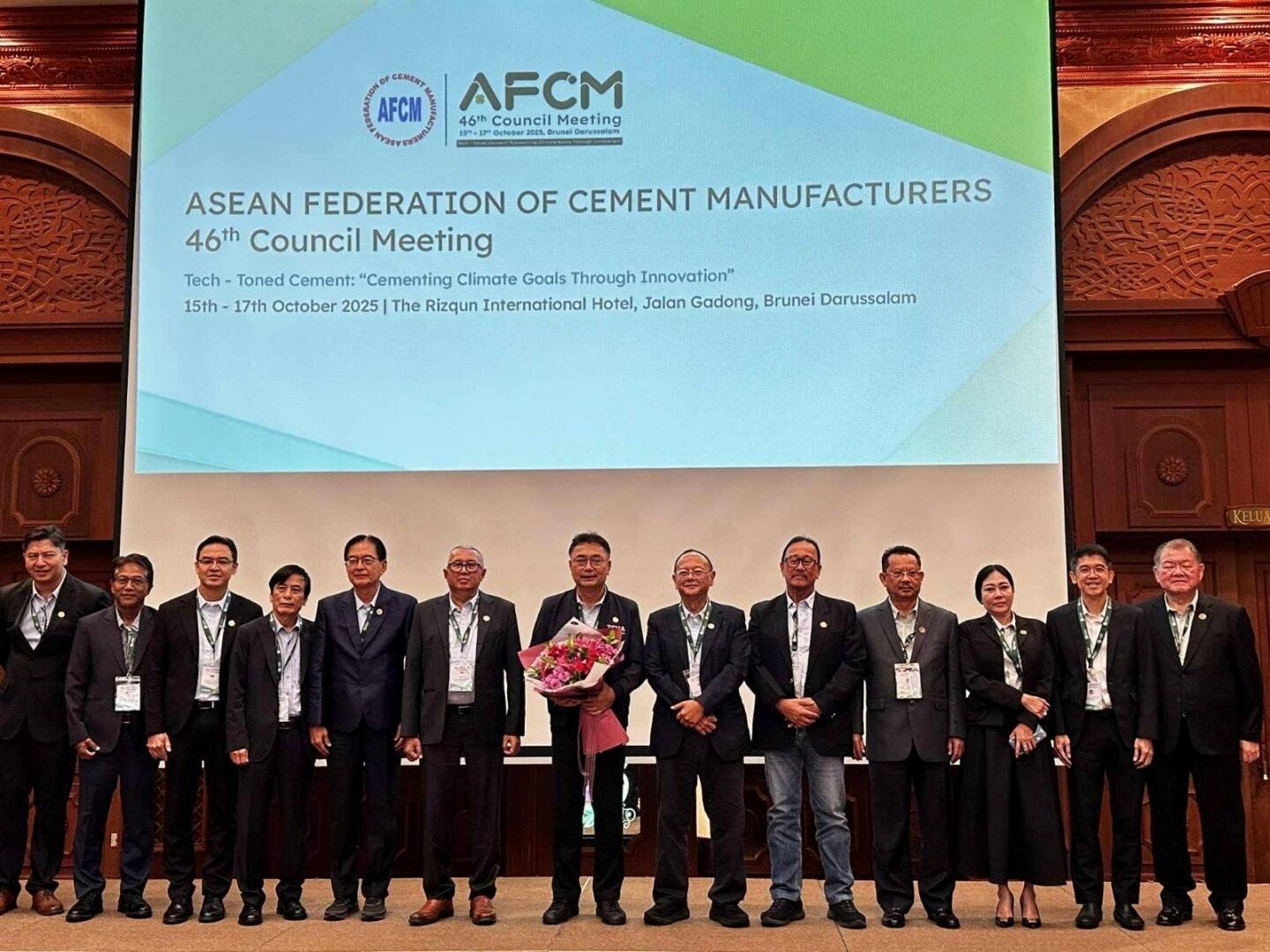
The ASEAN Federation of Cement Manufacturers (AFCM) has unveiled the 2035 AFCM Decarbonisation Roadmap, marking the world's first region-wide decarbonisation strategy for the cement industry. The announcement was made during the 46th AFCM Council Meeting in Brunei Darussalam, chaired by AFCM President Dr. Chana Poomee, with representatives from member countries.
As ASEAN economies continue to depend heavily on cement for infrastructure development, the sector faces mounting pressure to reduce CO2 emissions in preparation for global climate negotiations at COP30 in Brazil. Supported by the Global Cement and Concrete Association (GCCA), the roadmap outlines a unified regional commitment aligned with national climate policies and international environmental targets.
The strategy is built on four key pillars: expanding low-carbon cement through performance-based standards; increasing the use of clean and renewable energy while enhancing thermal and electrical efficiency; adopting advanced decarbonisation technologies such as carbon capture, utilisation, and storage (CCUS); and developing new supplementary cementitious materials for next-generation low-carbon products. AFCM estimates that full implementation could slash regional CO2 emissions by up to 38 million tonnes by 2035.
Dr. Poomee described the roadmap as a "collaborative regional strategy," emphasizing that targets and timelines will vary across member countries based on local industrial conditions, energy systems, and regulatory frameworks. A highlighted short-term action is the phased reduction of Ordinary Portland Cement (OPC), positioned as an immediate high-impact measure for emissions cuts.
Cement associations from Brunei Darussalam, Cambodia, Indonesia, Malaysia, the Philippines, Singapore, Thailand, and Viet Nam have endorsed the roadmap, underscoring the importance of policy alignment, greater alternative fuel adoption, broader low-carbon technology uptake, and market expansion for low-carbon cement. Dr. Poomee stressed that government support is crucial to facilitate the transition, attract green investments, and bolster the competitiveness of ASEAN's cement sector in the global low-carbon economy.
Source: Compiled by the Multilateral Trade Policy Department, Ministry of Industry and Trade of Viet Nam